My Reflections on Rising Prices, Gold, and the Future of Jewellery
Have you ever stopped to consider what truly happens when you invest in gold? I ask myself this question often—more than most, perhaps—because gold is not only my material of work but also a living thread that connects miners, artisans, investors, and the planet itself. Recently, this question has become even more urgent. Gold is rising in leaps and bounds, and at the time of writing, on 24 November 2025, it sits at just over €3,500 per ounce (31.1 grams).
In uncertain times, people often turn to gold because it has historically been regarded as a store of value. And doing so for centuries. Yet what I see, from my vantage point as both a goldsmith and a Fairmined licensee, is that the rising price of gold has implications far beyond the financial markets. It can influence supply chains, mining communities and the wider jewellery sector. It ripples outward; into supply chains, communities, ecosystems, and and the choices we make when deciding where to invest.
In this article, I explore what rising gold prices mean for the jewellery sector, why the origin of gold matters, and what Fairmined certification tells us about the material we choose to work with.
Why Gold Prices Rise—and Why It Matters
Gold is famously resilient. When global politics wobble, when currencies fluctuate, when markets lose their shine, gold becomes the safe harbour. And so, as uncertainty grows, so does demand. Yet the dramatic rise to €3,500 per ounce brings more than financial comfort to investors. It can also affect the gold supply chain, particularly where mining and trading activities are less regulated or less transparent.
As a Fairmined licensee, this is the question I keep returning to: How does the rising price of gold affect the supply chain behind my materials, and how can I know more about the origin and certification of the gold I work with?
The uncomfortable truth is that rising prices create powerful incentives—not only for legitimate mining but also for illegal operations.
Rising Gold Prices: A Double-Edged Sword
On the one hand, a high gold price can increase the value of gold produced by mining organisations operating within certified systems. Depending on the certification and the organisation involved, this can be connected to specific requirements and benefits defined by the applicable standard.
But there is another side to the story. When gold prices rise sharply, illegal mining can become more attractive. Illegal mining can be associated with environmental damage, social and labour concerns, criminal activity and, in some regions, serious risks to people working in or living near mining areas. It becomes a vicious circle: Rising prices can create additional pressure within the gold supply chain.
But I want to be clear: this is not an inevitable outcome everywhere. Much depends on regulation, transparency and the systems through which gold is sourced and traded. Fairmined provides a defined certification standard for participating artisanal and small-scale mining organisations, with requirements covering areas such as working conditions, environmental practices, economic conditions and traceability.
The Environmental Toll of Illegal Gold Mining
Illegal mining is devastating to the environment, and its harm reaches far beyond the mined sites themselves.
The hidden poison behind “cheap” gold
Mercury is used in some forms of artisanal and small-scale gold mining to separate gold from ore or sediment. Mercury released during these processes can enter soil, water and the atmosphere. It can also accumulate in organisms and move through food chains.
Mercury contamination can affect communities downstream and can have consequences for wildlife and aquatic ecosystems. Mercury can persist in the environment and accumulate in food chains.
In these circumstances, gold extraction can be associated with risks to human health and the environment.
Deforestation and water contamination
According to research from theUNODCand environmental organisations across the world, illegal mining operates outside the applicable regulatory framework. Illegal mining can involve forest clearance, habitat loss and changes to water systems. Wildlife habitats are destroyed. Water sources become contaminated by sediment, chemicals, and waste.
The World Resources Institute has reported a relationship between rising gold prices and increased illegal mining in parts of the Amazon, resulting in both ecological destruction and social harm. People working in or living near these mining areas can face exposure to toxic substances, difficult labour conditions and, in some regions, criminal activity.
Photocopy from the book "Gold Laundering" by Mike Pieth: Open mining in Colombia's Chocó region is a complex issue involving both legal and illegal operations, with a significant environmental impact due to widespread deforestation and mercury pollution.
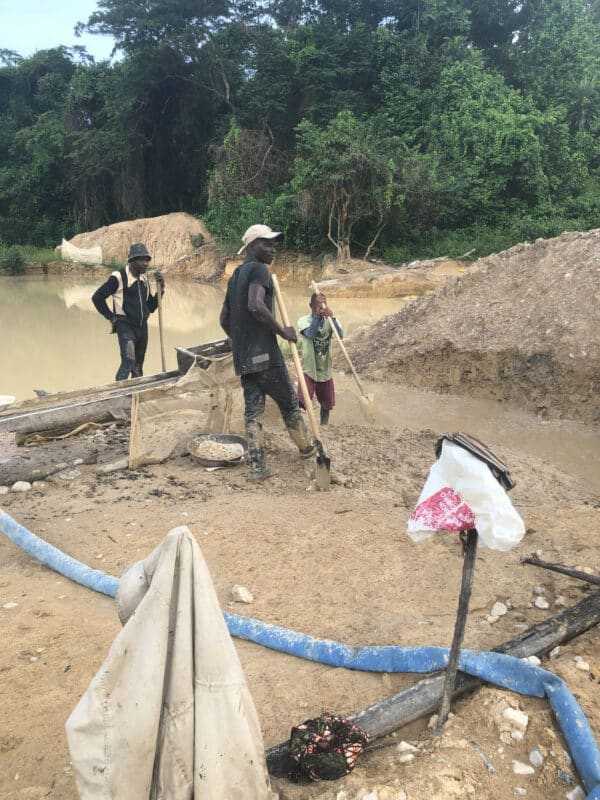
photograph by Saskia Shutt; informal mining in Liberia
The Human Cost: What Price Do We Put on Life?
Photograph by Saskia Shutt during her visit to CECOMIP, Peru, 2022. Fairmined-certified miner holding a 125-gram gold bar.
When we talk about investing in gold bars, beautiful, heavy, perfectly stamped, it can be easy to forget the human beings at the other end of the chain. People working in illegal mining operations may work without appropriate protective equipment or access to the safety measures and support available within regulated mining systems.
So I find myself asking:
What is the true price of a 100g or 200g gold bar? What human and environmental questions should we ask about the origin of the gold we invest in?
And if we stockpile gold bars for the future, shouldn’t we also ask where that gold came from and what happened along the way?
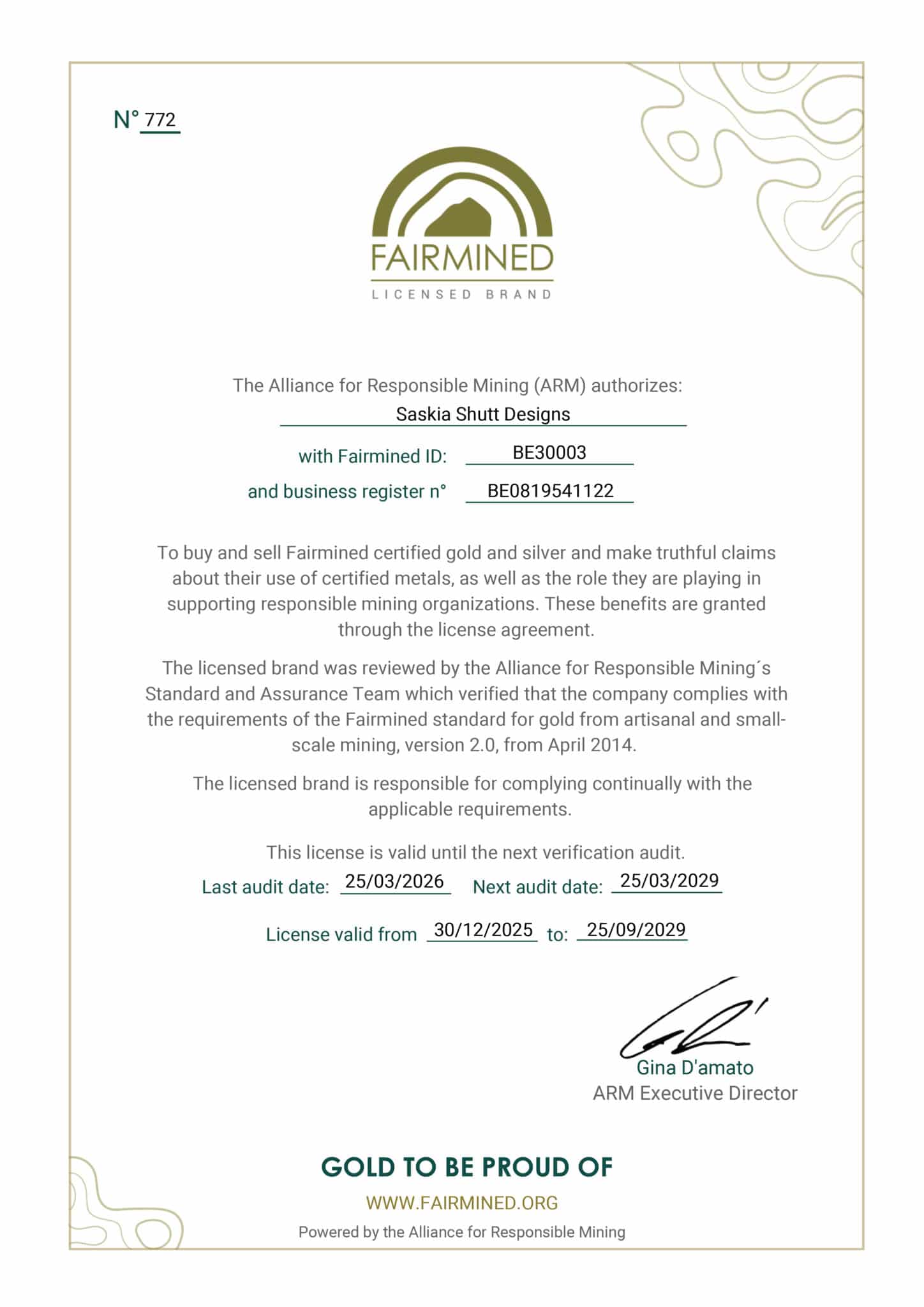
This is why information about the origin of gold matters to me. It is also why certification systems such as Fairmined exist. The Fairmined Standard sets defined requirements for participating artisanal and small-scale mining organisations and provides a framework for certified gold to be traced through the supply chain.
Criminal Networks and the Domino Effect
Illegal gold can enter wider criminal networks and may become connected with activities such as money laundering, corruption and organised crime. These issues are explored in detail by Mark Pieth in his book Gold Laundering: The Dirty Secrets of the Gold Trade and How to Clean Up (2019). The high value of gold can make it attractive to criminal networks seeking to profit from the trade.
These activities can have consequences for communities and regions where illegal mining and associated criminal activity take place.
By contrast, certification systems such as Fairmined establish defined requirements for participating mining organisations and provide mechanisms for documenting certified gold through the supply chain.
How Rising Gold Prices Affect Jewellers
Saskia Shutt working at her jeweller’s bench in her Brussels atelier. Photograph: Sound&Style.
Jewellers are feeling the impact of rising gold prices. The cost of materials increases, margins can become tighter, and customers may reconsider the timing or scope of a commission. But what if we look at this from a positive viewpoint?
What if rising gold prices became an opportunity instead of an obstacle?
What if consumers chose to put their money into jewellery rather than gold bars locked away in safes, choosing pieces that carry both personal and material value? Bespoke jewellery that carries an emotional story as well as a story about its materials. Handmade pieces where information about provenance and, where applicable, certification can form part of the story behind the jewellery.
Investing in Gold Jewellery with a Story
When you choose jewellery made with Fairmined gold, you are choosing gold that comes with a defined certification standard and documented requirements.
Your jewellery retains material value: Gold jewellery contains a precious metal with an established material value. It can be worn, cherished and passed down while retaining the value of the gold it contains.
You choose gold covered by a defined standard: Fairmined certification sets requirements for participating artisanal and small-scale mining organisations, including requirements relating to working conditions, health and safety, economic conditions and the use of mercury. Mining organisations must meet the requirements of the Fairmined Standard to maintain their certification.
You choose gold covered by environmental requirements: The Fairmined Standard includes requirements relating to environmental practices and the use of mercury in participating mining organisations. These requirements form part of the certification process.
You preserve craftsmanship: Commissioning a jeweller means choosing a piece made through individual design and skilled handcraft rather than a mass-produced object. The result is a piece made specifically for you.
You get to wear what you own: A gold bar sits in a vault. Gold jewellery can be worn, enjoyed and associated with the stories and milestones of your life.
As someone who has visited Fairmined mines in Peru and Colombia, seen the work, the care, the social impact, and the sense of pride within each community, I can tell you: the difference is profound. Fairmined gold is not a luxury—it is a responsibility, a promise, and a partnership.
Photograph by Saskia Shutt; ring in Fairmined eco gold and set with purple sapphires and sphene
Imagining a Different Future for Gold
Imagine a future where rising gold prices are accompanied by greater attention to the people, places and practices behind the gold we buy.
In that future, more gold jewellery could carry documented information about its origin and, where applicable, certification.
Mining organisations could work within defined standards for working conditions and environmental practices, with clear requirements relating to the use of mercury. Buyers could also have greater access to information about the origins of the gold in their jewellery.
Fairmined certification offers one framework for putting some of these principles into practice. As a consumer, choosing Fairmined gold is one way to choose gold covered by a defined certification standard. This is the direction I have chosen to pursue in my own work as a goldsmith and designer.
Choosing Gold with a Documented Story
Photograph by Saskia Shutt; Akoya pearls in Fairmined eco gold pendant and earrings
Whether you choose Fairmined-certified gold bars from wholesalers such as Fairever, or commission a piece of jewellery from me using Fairmined gold, you are choosing gold covered by a defined certification standard, with requirements relating to working conditions, environmental practices and traceability.
Your gold can carry more than material value. It can also carry information about its origin, the certification standard behind it, and the people and places connected to its journey.
Choose Gold with a Story, And Let’s Create Something Meaningful Together
If you’re thinking about investing in gold, I invite you to consider the origin of the gold you choose, alongside its material value and the craftsmanship involved. Fairmined gold comes with a defined certification standard and documented requirements for participating mining organisations. Jewellery also offers the pleasure of owning and wearing something made especially for you.
If you feel inspired to explore a bespoke piece, something handcrafted, meaningful and made with Fairmined gold, I’d love to welcome you into my workshop.
Book your appointment with me, and together we’ll design a piece that reflects your personal story, your style and the material story of the gold from which it is made.
Photograph by Saskia Shutt; bangle in Fairmined white gold and customer's own diamonds