Where Valentine’s Day Comes From: Love Rooted in Courage and Commitment
The origins of Valentine’s Day are complex, layered and, in places, uncertain. Yet this uncertainty is part of what makes the story so human. Long before Valentine’s Day became associated with romance, mid-February was a time of transition. In ancient Rome, the festival of Lupercalia was celebrated in February, although its precise relationship to the later traditions surrounding Valentine’s Day remains uncertain. The period was associated with rituals connected to fertility and purification, adding another layer to the long history of February celebrations.
The name Valentine is most often associated with Saint Valentine, or possibly several figures who shared that name. One of the most enduring legends tells of a priest who secretly married couples despite a ban imposed by the Roman emperor. Whether legend or fact, the story has survived because of what it represents: a belief in love, commitment and personal freedom, even when these come at a cost.
By the Middle Ages, particularly in Europe, Valentine’s Day had evolved into a celebration of romantic love. Written notes, poems and symbolic objects were exchanged as expressions of affection. What touches me about these early traditions is their intimacy. They were not about excess or spectacle, but about intention, choosing words or objects that carried meaning for one specific person.
Where Valentine’s Day Comes From: Love Rooted in Courage and Commitment
The origins of Valentine’s Day are complex, layered and, in places, uncertain. Yet this uncertainty is part of what makes the story so human. Long before Valentine’s Day became associated with romance, mid-February was a time of transition. In ancient Rome, the festival of Lupercalia was celebrated around this period, marking fertility, renewal and the slow return of light after winter. It reminds us that this time of year has always been linked to life, hope and continuity.
The name Valentine is most often associated with Saint Valentine, or possibly several figures who shared that name. One of the most enduring legends tells of a priest who secretly married couples despite a ban imposed by the Roman emperor. Whether legend or fact, the story has survived because of what it represents: a belief in love, commitment and personal freedom, even when these come at a cost.
By the Middle Ages, particularly in Europe, Valentine’s Day had evolved into a celebration of romantic love. Written notes, poems and symbolic objects were exchanged as expressions of affection. What touches me about these early traditions is their intimacy. They were not about excess or spectacle, but about intention — choosing words or objects that carried meaning for one specific person.
The Tradition of Giving: A Universal Human Gesture
Giving is one of the oldest human rituals. Across cultures and throughout history, gifts have been offered to mark important moments, to express gratitude, to strengthen bonds and to show care. In its truest form, giving is not about price or status. It is about recognition.
A meaningful gift says: I see you. Value you. I have taken time to choose something that reflects who you are. This is why certain objects, simple, thoughtful and carefully chosen, can hold so much emotional weight.
Valentine’s Day sits at the intersection of love and giving. It invites us to reflect on our relationships and to express affection through gestures that feel personal. When giving becomes automatic or purely symbolic, it loses its power. When it is intentional, it becomes a form of dialogue, a way of speaking without words.
Jewellery as a Symbol of Love and Memory
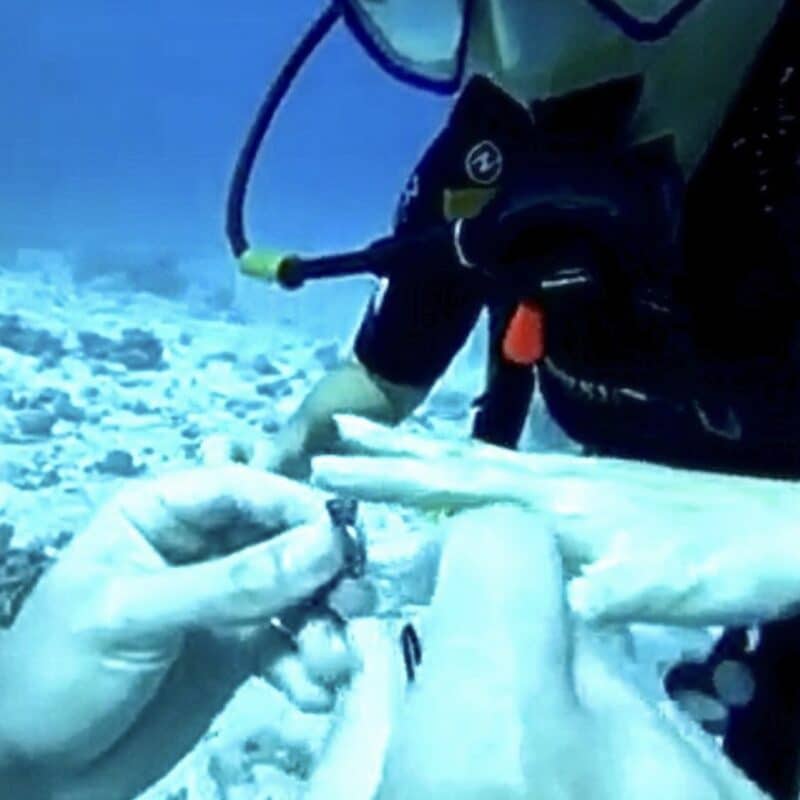
Underwater proposal with a ring in Fairmined rose gold
Jewellery has accompanied humanity for thousands of years. Long before it was decorative, it was symbolic. Rings, amulets and talismans were created to protect, to signify belonging, to mark transitions and to carry meaning across generations.
Even today, jewellery remains one of the most powerful ways to express love. A piece of jewellery is worn close to the body. It becomes part of everyday life, absorbing gestures, memories and emotions. Over time, it can become a quiet witness to a relationship.
This is why jewellery is so often chosen to mark moments of commitment, engagements, anniversaries and Valentine’s Day. A jewel does not shout. It stays. Accompanies. Lasts.
For me, this permanence is part of what makes the choice of materials so important. When I create a piece of jewellery, I want to know as much as possible about the materials I work with, including their origin and, where applicable, the certification standards behind them.
Jewellery: Looking Beneath the Beauty
When we look at a finished piece of jewellery, we see its surface: the glow of gold, the brilliance of a stone. What we do not always see is the journey behind the materials from which it is made. Gold and precious stones have geological origins and pass through different stages of extraction, processing, trading and craftsmanship before becoming jewellery.
The jewellery industry involves complex supply chains, and questions about working conditions, environmental practices and the origin of materials form part of the wider conversation around mining. For me, working as a goldsmith means taking an interest in those questions and learning more about the materials I choose to work with.
Information about provenance can help make some of that journey more visible. This is one reason I work with Fairmined gold. Fairmined is a certification standard for participating artisanal and small-scale mining organisations, with defined requirements covering areas including working conditions, environmental practices, economic conditions and traceability.
For me, the story also continues in the workshop. I work to order, repair and remodel existing jewellery, and create pieces designed to be worn and kept over time. Craftsmanship, individual design and the possibility of giving existing materials a new form are all important parts of my practice.
Mining Communities and the People Behind the Gold
Behind every gram of gold are people, including miners, their families and the communities connected to mining. Artisanal and small-scale mining organisations often operate in rural areas and form part of local economies and livelihoods.
This is one reason I am interested in the systems through which gold is sourced and traded. Fairmined provides a defined certification standard for participating artisanal and small-scale mining organisations. The Fairmined Standard includes requirements relating to working conditions, health and safety, environmental practices, economic conditions and traceability.
During my visits to Fairmined mining organisations in Peru and Colombia, I had the opportunity to meet people working in these organisations and to see some of the practices covered by the certification standard. These experiences gave me a much deeper understanding of the people and places connected to the gold I work with.
For me, this is part of the story behind a piece of jewellery. Choosing Fairmined gold means choosing gold covered by a defined certification standard, while the finished piece carries its own story of craftsmanship, design and personal meaning.
Honouring the Person Who Receives the Gift
At the heart of every Valentine’s gift is a person. Honouring them means more than choosing something beautiful. It means paying attention. What do they value? How do they live? What objects feel aligned with who they are?
A thoughtfully chosen piece of jewellery reflects not only love, but respect. It says: I see your individuality. I honour your values. Offering a gift that reflects these concerns about sustainability, ethics and environmental impact are deeply personal. Offering a gift that reflects these concerns can be a powerful expression of care.
Jewellery chosen with intention becomes more than an accessory. It becomes a companion, something that carries meaning rather than noise.
Reimagining Value: Craftsmanship, Materials and Time
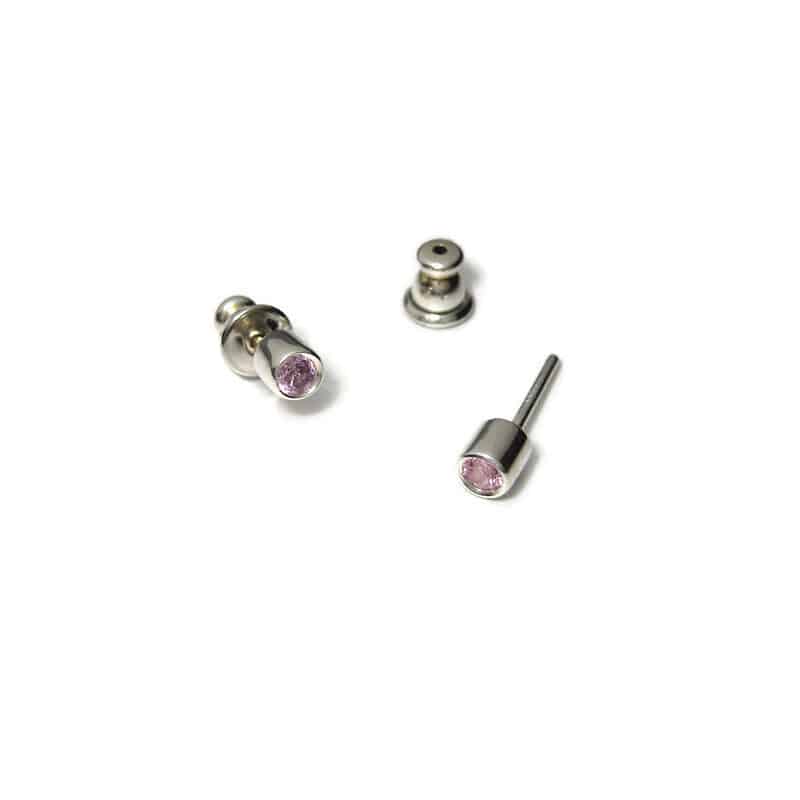
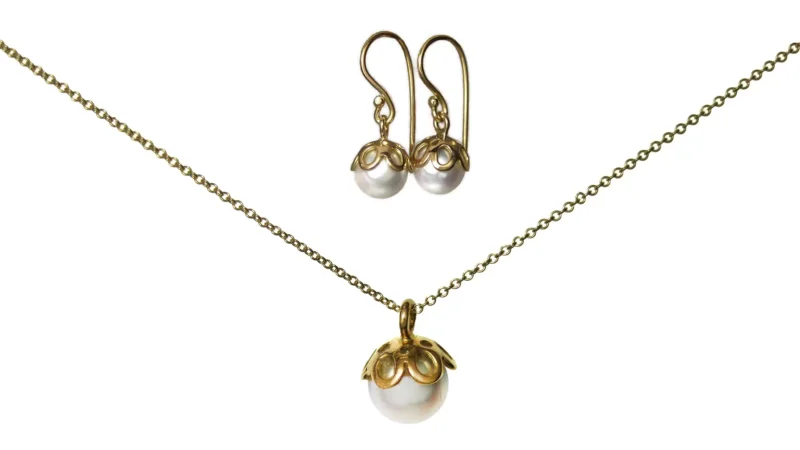
Handmade Fairmined silver earrings set with pink sapphire
Our culture often defines value in terms of speed, novelty and volume. Yet jewellery can be approached differently, with attention to design, craftsmanship, materials and the time involved in making each piece.
I work to order rather than producing collections or holding stock. Each piece is individually designed and made in my Brussels workshop, with the materials forming an important part of its story.
For me, giving a piece of jewellery on Valentine’s Day can therefore be about more than the object itself. It can be a way of choosing something made with time and attention, selected for a particular person and intended to become part of their story.
Valentine’s Day as a Thoughtful Choice
For me, Valentine’s Day is not about grand gestures or perfection. It is about alignment, between what we feel, what we give and what matters to us.
A piece of jewellery can hold many layers at once: the story of the person who receives it, the craftsmanship involved in making it, and the materials from which it is created.
As Valentine’s Day approaches, I invite you to look beyond the surface. Ask where the materials come from. Ask about the craftsmanship. Ask what makes a particular piece meaningful to the person who will wear it. Choose a gift that carries meaning, intention and a story.
If this way of giving resonates with you, take a moment to explore, to ask questions, and to imagine jewellery not just as an object, but as something connected to a particular person, a particular moment and the story behind its materials. Let this Valentine’s Day be an invitation to give with both heart and thought.